 Theorie B
Short answer
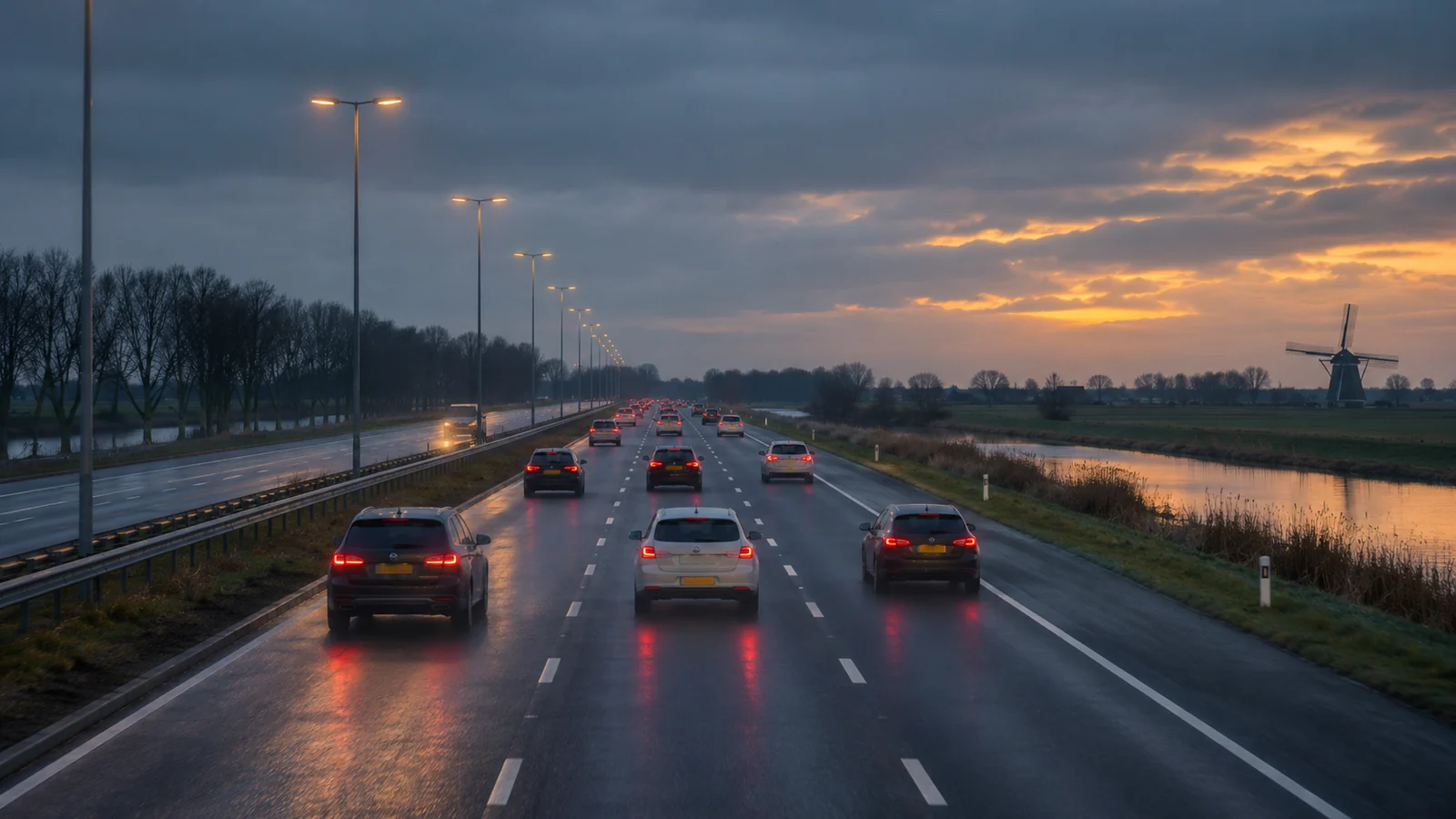
In queuing traffic, you may pass a queue on the right. You do not have to stay behind the car to your left when your lane is moving faster.
You're in a traffic queue on a road with several lanes in the same direction. Your lane starts moving again, but the lane to your left is almost stationary. Can you pass those cars on the right?
The exception for queuing traffic
You may remember the rule against overtaking on the right. There is an exception for queuing traffic, allowing the separate queues to move at their own pace.
The condition matters: this is queuing traffic. You cannot use this rule to justify every situation in which you want to pass another car on the right.
You do not need to look for an exception that applies only to motorways either. This situation concerns queues in several lanes travelling in the same direction.
An example in the rush hour
You're in the right-hand lane with a long queue of cars ahead. There is also a queue in the lane to your left. Both queues move forward a little from time to time.
Your queue starts moving while the cars on the left remain stationary. You stay in your lane and follow the queue, passing the cars beside you on their right.
That is allowed in this situation. You do not have to brake every time you draw level with a car in the left-hand lane. Keep watching what is happening around you, though. Another driver may be planning to change lanes.
The misconception: passing on the right is never allowed
The word never makes this statement wrong. Conditions and exceptions can determine what a traffic rule allows in a particular situation.
Read the whole situation first. Does it describe queuing traffic? Is your queue moving faster than the queue on the left? If so, this exception is what matters.
Try it / Practice question
You are in a queue on a road with several lanes in the same direction. The queue to your left is moving more slowly. May you pass it on the right?
In queuing traffic, you may pass a queue on the right.
RVV 1990, art. 13 lid 2