 Theorie B
Short answer
You may round your arrival time up to the next hour or half-hour. If you arrive at 10:10, that means 10:30. You cannot choose any later time you like.
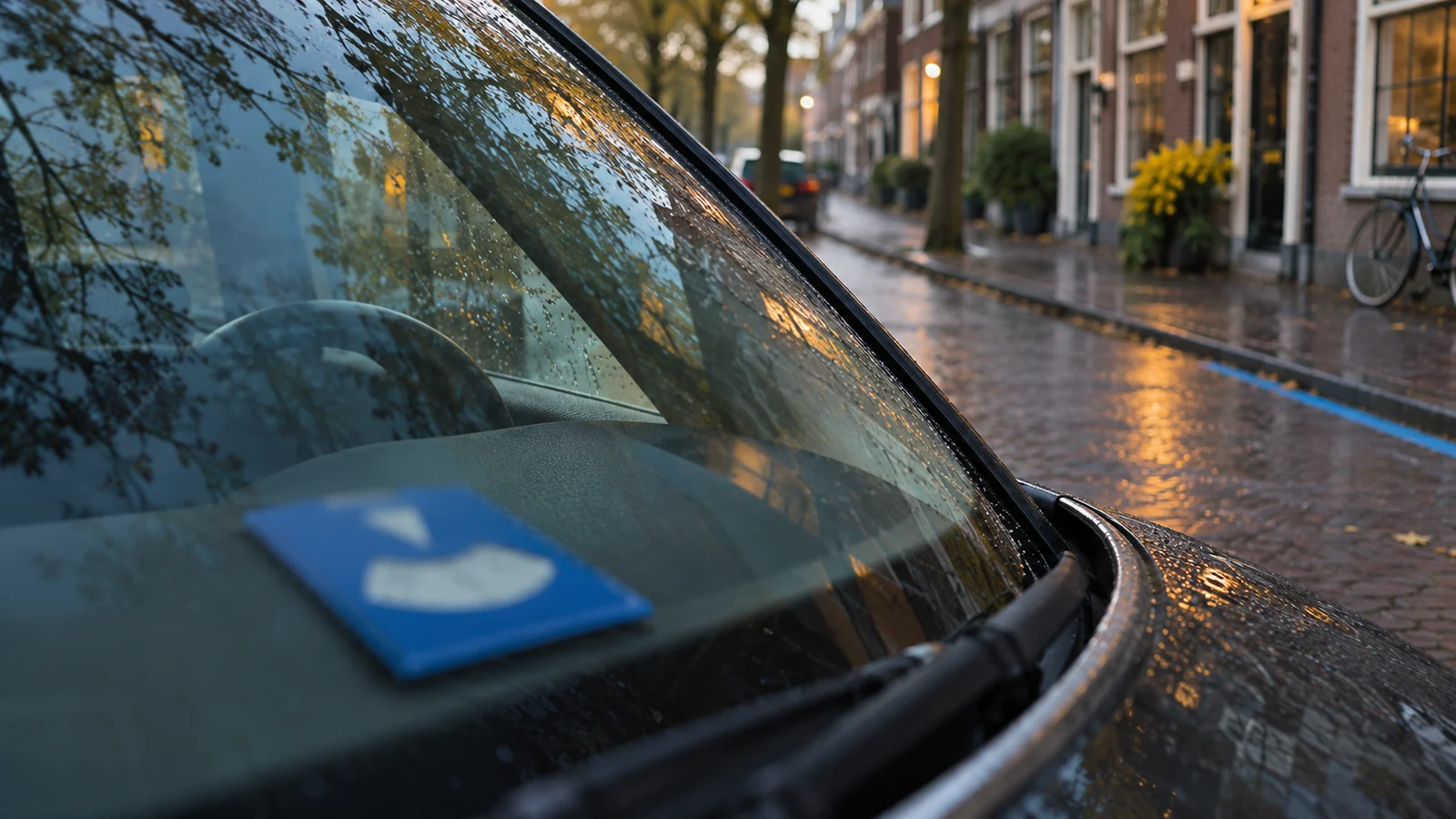
You park in a blue zone and reach for your blue parking disc, the disc used to display your arrival time. It is 10:10. Do you set it to 10:00 or 10:30, or can you go straight to 11:00?
How rounding up works
Think of the hours and half-hours on a clock: 10:00, 10:30, 11:00 and 11:30. Find the first of those times after your arrival.
Arriving at 10:10? The next half-hour is 10:30. Arriving at 10:40? The next hour is 11:00.
You are not rounding to the nearest time. At 10:10, 10:00 is nearer, but the rule allows you to round upwards.
An example when parking
You arrive at a shop at 10:10 and park in a blue zone. You set the arrival time on your parking disc to 10:30.
Spending a few more minutes in the car gathering your bag does not make 11:00 the correct choice. For this question, use your arrival time and the next hour or half-hour.
Rounding up does not let you choose from all the later times on the disc. After 10:10, the next option is 10:30. You do not skip a half-hour.
The misconception: I can always add half an hour
Rounding up is different from adding thirty minutes as a matter of course. Adding thirty minutes to 10:10 gives you 10:40. That is not the rounding described by this rule.
Follow this simple sequence: check your arrival time, find the next hour or half-hour, and set the disc to that time.
Try it / Practice question
You arrive in a blue zone at 10:10. To what time may you round the arrival time on your parking disc?
You may round your arrival time up to the next full or half hour.
RVV 1990, art. 25 lid 4