 Theorie B
Short answer
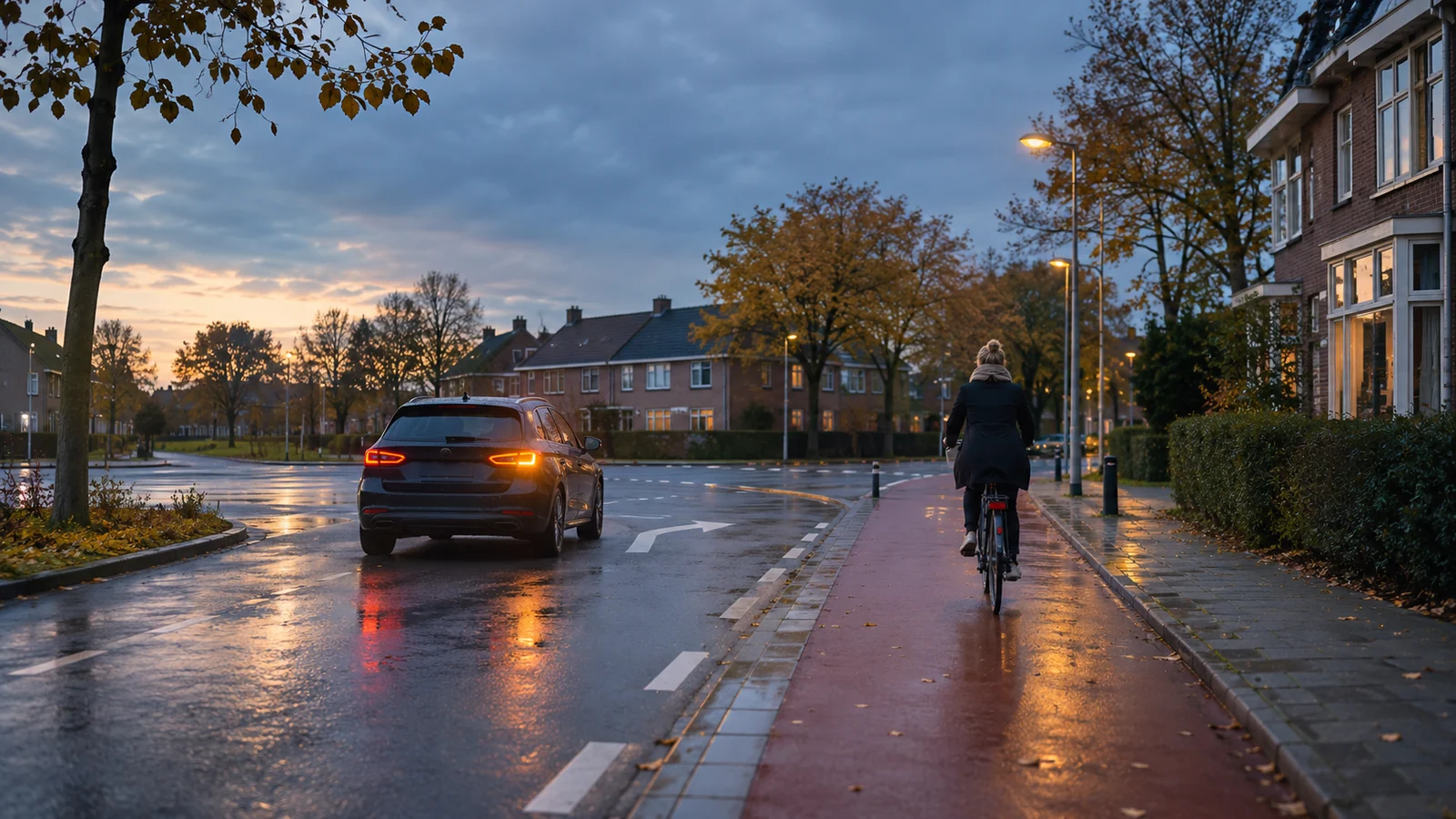
If you are travelling on the same road, let the cyclist go first. You are turning while the cyclist continues straight ahead. Using your indicator does not change the order.
You want to turn right into a street. A cyclist beside you is continuing straight ahead. You've already switched on your indicator. Should the cyclist wait, or should you?
What does the same road mean?
This rule concerns traffic travelling beside you on the same road. If your turn takes you across its path, you must let it go first.
Here, the cyclist beside you is continuing straight ahead while you want to turn right. Wait until the cyclist has passed and you can turn without blocking their path.
The words on the same road matter. This rule concerns the cyclist beside you who is continuing straight ahead. Do not turn it into a general rule that every cyclist goes first in every situation.
An example on the road
You're driving along a residential street and want to turn right. Someone is cycling to your right in the same direction. There are no traffic lights. The cyclist continues along the road.
If you turn immediately, you will cross the cyclist's path. Let them pass first, then turn when it is safe.
Check the traffic beside you before you turn. A cyclist you have just overtaken may still be alongside when you reach the corner.
The misconception: my indicator gives me priority
Your indicator tells other people what you intend to do. It does not give you the right to go first.
A right turn may seem like a small, quick movement, but that does not change the rule. You are turning and the cyclist on the same road is continuing straight ahead. The cyclist does not have to slow down to make room for your turn.
Try it / Practice question
You are turning right. A cyclist alongside you is continuing straight on along the same road. There are no traffic lights. Who goes first?
When turning, you must let traffic alongside you on the same road go first.
RVV 1990, art. 18 lid 1